Zero-Drawback for Bamboo & Wood Exports: Who Gets Exposed When Policy Tide Recedes?
- Share
- publisher
- Greenwood Woodencutlery
- Issue Time
- Oct 15,2026
Summary
Explore how China’s 2027 export VAT rebate cancellation may affect bamboo and wood product costs, pricing, suppliers, and global sourcing strategies.
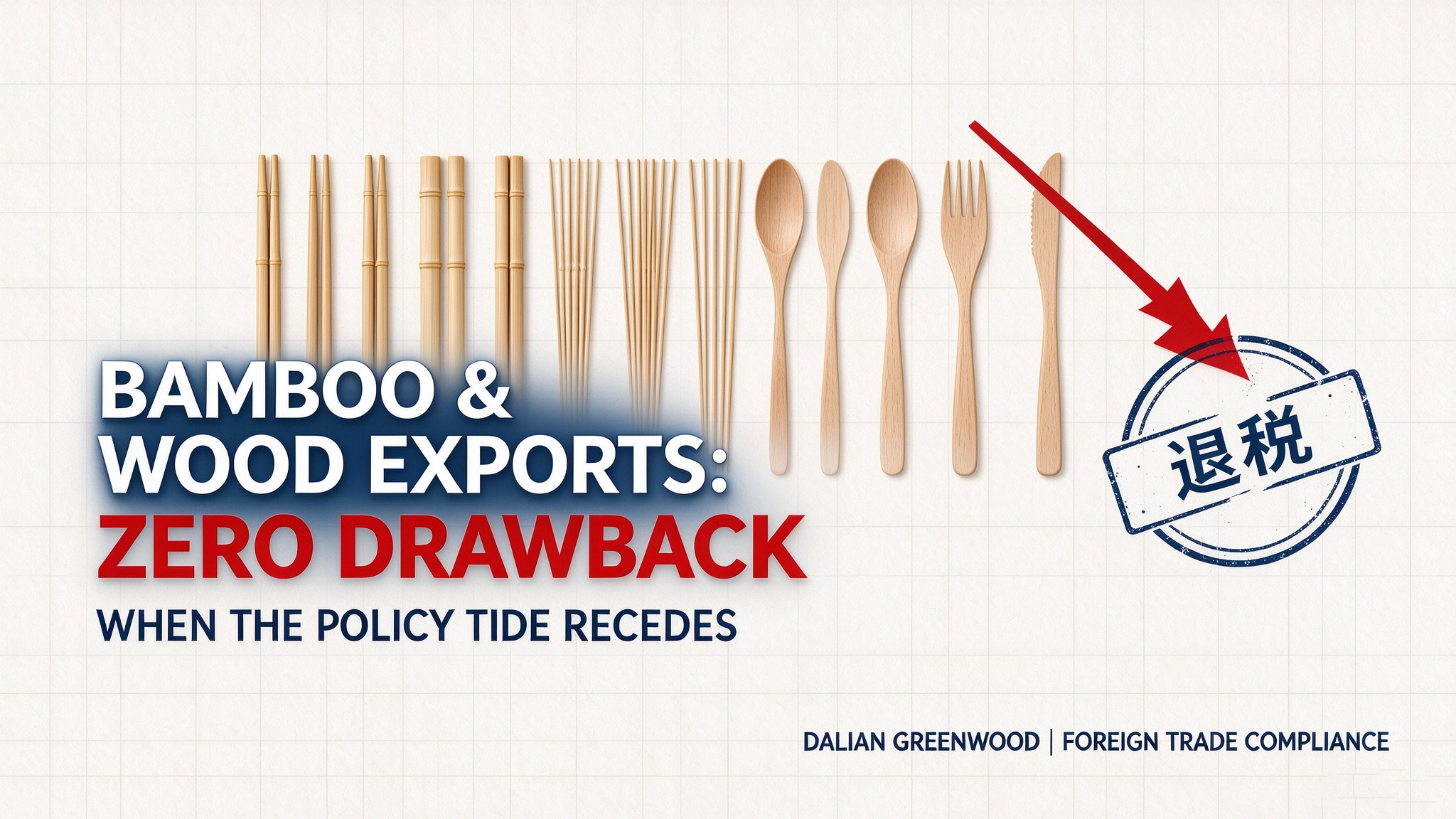
On April 1, 2027, a new fiscal policy takes effect: export VAT drawback for bamboo-wood products will be completely eliminated.
Twenty HS codes are covered in the annex list, including bamboo flooring, bamboo plywood, bamboo chopsticks and bamboo skewers. Though the policy text does not explicitly name bamboo-wood goods, the product list tells the real story.
Costs Rise about 13%, Thin Margin Businesses Can Hardly Afford
With drawback cancelled, input VAT previously refundable will be fully counted into production cost, bringing an approximate 13% cost increase. For example, exporting 1 million RMB worth of goods will generate an extra cost of about 115,000 rmb
The bamboo-wood export sector features thin-margin, high-volume business, relying on low-cost advantage and eco-friendly recognition overseas. Most items already carry slim gross margins with limited pricing power. After drawback removal, many manufacturers will slip into net-loss territory. It is no longer about squeezed profit, but a matter of business survival.
To maintain the previously
agreed purchase unit price, we recommend all customers build up certain inventory of bamboo
related products before April 2027.
Otherwise ,market will face price increase without doubts
Global export environment keeps changing. Compliance, product quality and resilient supply chains form the real moat for foreign-trade manufacturers.Greenwood focuses on wooden and bamboo tableware export. Feel free to reach out for industry and compliance-related discussions.