Wooden Plates vs. Palm Leaf Plates: Comparison and U.S. Market Demand Analysis
- Share
- Issue Time
- Jun 25,2026
Summary
This paper compares wooden and palm leaf disposable plates for the US market. Wooden ones have lower import risks, steady quality & supply at lower costs for mainstream use, while palm leaf plates face compliance & supply issues, only fitting niche premium events amid America’s plastic ban-driven eco-tableware boom.
Introduction
As more U.S. states implement restrictions and bans on single-use plastic foodservice products, biodegradable and eco-friendly disposable plates have become essential for restaurants, supermarkets, catering services, and food distributors. Currently, the most common sustainable plate options on the market are wood veneer plates and palm leaf plates. While both are positioned as environmentally friendly alternatives, they differ significantly in terms of import compliance, product quality, supply chain reliability, and market suitability.
This article provides a comprehensive comparison of these two product categories and analyzes current purchasing trends in the U.S. market based on the latest policies and consumer demand in 2026.
I. Comprehensive Comparison: Wooden Plates vs. Palm Leaf Plates
1. Import Compliance Risks (A Key Consideration for the U.S. Market)
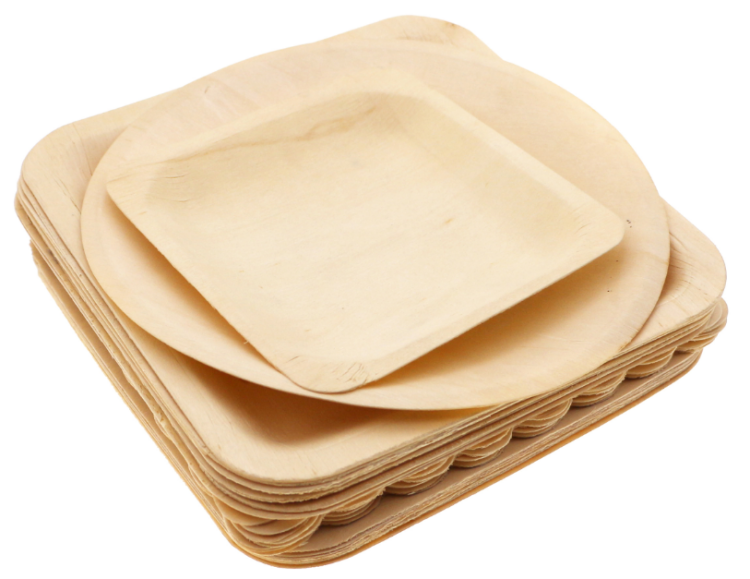
Food-Grade Wooden Plates (Poplar Veneer Plates)
a. Mature Regulatory Compliance
(1)Generally required to comply with FDA food-contact regulations under FDA 21 CFR standards.
(2)Migration testing using acidic solutions, ethanol, and isooctane is typically sufficient for customs clearance.
b. Widely Accepted Across the United States
(1)Recognized as compliant alternatives in states with strict plastic-reduction policies, including California and New York.
(2)No specific import restrictions currently target wooden disposable plates.
c. Flexible Manufacturing Options
(1)Can be customized with PFAS-free water- and oil-resistant coatings.
(2)Suitable for sauces, oily foods, and various foodservice applications while maintaining high testing compliance rates.
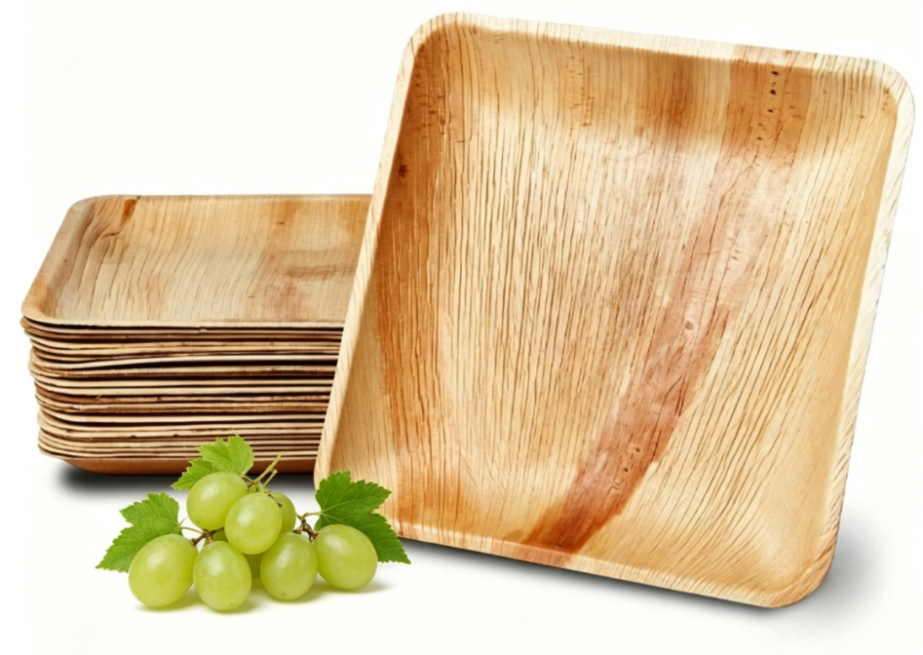
Palm Leaf Plates
a. Higher Import Compliance Risks
(1)Regulatory scrutiny on natural agricultural products continues to increase.
(2)Import inspections may involve additional verification of raw material sources, treatment processes, and food-contact safety documentation.
b. Complex Traceability Requirements
(1)Raw materials are primarily sourced from Southeast Asia and India.
(2)Importers may be required to provide extensive supply chain and agricultural traceability documentation.
c. Inconsistent Quality Control
(1)Natural variation in leaves can lead to significant differences between production batches.
(2)Large retailers and chain restaurants often impose strict quality audits and supplier qualification standards.
2. Product Quality and Performance Comparison
| Comparison Factor | Wooden Veneer Plates | Palm Leaf Plates |
| Appearance Consistency | Automated production ensures standardized thickness, dimensions, and wood grain appearance | Natural leaf variations create differences in thickness, texture, and shape |
| Water & Oil Resistance | Can be treated with professional water- and grease-resistant coatings; suitable for soups and oily foods | More susceptible to moisture absorption and softening when exposed to liquids |
| Odor Impact | Mild natural wood aroma with minimal influence on food flavor | Natural plant odor may be noticeable and can affect dining experience |
Transportation Durability | Strong rigidity, stackable, and resistant to bending during shipping | Softer structure may deform under heavy loads and long-distance transport |
Customization Capability | Supports custom sizes, shapes, logo printing, and surface treatments | Limited customization due to natural material characteristics |
3. Supply Chain and Cost Differences
Advantages of Wooden Plate Supply Chains
(1)Mature automated manufacturing systems with stable production capacity.
(2)Reliable supplies of poplar and birch raw materials.
(3)Strong economies of scale for large-volume purchasing.
(4)Reduced labor costs through automation.
(5)Predictable lead times suitable for long-term supply contracts.
(6)Standardized export inspection and testing procedures that facilitate efficient international shipments.
Challenges in Palm Leaf Plate Supply Chains
(1)Dependence on naturally fallen leaves collected by local farmers.
(2)Seasonal availability may affect production consistency.
(3)Greater reliance on manual labor increases manufacturing costs.
(4)Retail prices are often 15–30% higher than comparable wooden plates.
(5)Supply fluctuations can create longer and less predictable lead times.
II. U.S. Eco-Friendly Plate Market Analysis (2026)
1. Market Growth Trends
(1)The U.S. disposable tableware market is valued at approximately USD 7.58 billion and is projected to reach USD 9.14 billion by 2031, with a compound annual growth rate (CAGR) of approximately 3.82%.
(2)The biodegradable and compostable tableware segment is expanding more rapidly, driven by sustainability initiatives and plastic-reduction regulations.
(3)Wooden disposable plates continue gaining market share due to strong compliance, scalability, and cost advantages.
2. Policy-Driven Demand Growth
State-Level Plastic Reduction Measures
Several U.S. states have implemented restrictions on:
(1)Plastic straws
(2)Expanded polystyrene food containers
(3)Various single-use plastic foodservice products
These regulations are accelerating the transition toward biodegradable alternatives.
Corporate Sustainability Commitments
Major restaurant chains and foodservice companies are actively pursuing ESG and sustainability goals by reducing plastic consumption and increasing procurement of plant-based disposable products.
3. Key Buyer and Consumer Requirements
Buyer Priorities
Purchasing decisions are generally driven by:
(1)FDA food-contact compliance
(2)Consistent product quality
(3)Competitive procurement costs
(4)Sustainability credentials
Industry Standards
(1)PFAS-free grease-resistant coatings are increasingly becoming a standard requirement among supermarkets and foodservice operators.
(2)Reliable large-volume supply capacity is highly valued by chain restaurants and distributors.
Consumer Trends
(3)Growing numbers of U.S. consumers actively choose biodegradable tableware products.
(4)Household demand for convenient and environmentally friendly disposable plates continues to increase.
III. Market Summary and Purchasing Recommendations
1. Wooden Plates: The Mainstream Long-Term Choice for the U.S. Market
Wooden plates offer:
(1)Strong regulatory compliance
(2)Consistent automated production quality
(3)Extensive customization options
(4)Stable supply chains
(5)Competitive pricing
These advantages make them well suited for:
(1)Quick-service restaurant chains
(2)Supermarkets
(3)Catering services
(4)Banquet and event suppliers
(5)E-commerce distributors
As plastic alternatives continue to gain market share, wooden plates are positioned as one of the most scalable replacement solutions.
2. Palm Leaf Plates: A Niche Market Segment
Palm leaf plates appeal primarily to customers seeking a unique natural appearance for:
(1)Weddings
(2)Premium events
(3)Boutique catering services
However, buyers should carefully evaluate factors such as product consistency, supply stability, and import documentation requirements when considering large-scale procurement.
3. Core Purchasing Requirements in the U.S. Market
Successful products typically meet the following criteria:
(1)FDA-compliant food-contact materials
(2)Reliable water and grease resistance
(3)Consistent quality across large production volumes
(4)Stable pricing and supply
(5)Environmentally responsible product positioning
Wooden plates align well with these purchasing priorities across a broad range of commercial applications.
IV. Recommended Wooden Plate Supplier
Greenwood (Dalian) Industrial Co., Ltd.
With more than 20 years of experience in the development, manufacturing, and export of food-grade wooden plates, Greenwood (Dalian) Industrial Co., Ltd. operates fully automated production lines and maintains extensive inventory across a wide range of plate sizes and specifications.
Key capabilities include:
(1)Custom mold development
(2)Private-label logo printing
(3)PFAS-free water- and oil-resistant coating solutions
(4)Large-scale OEM and ODM production
Products are manufactured using premium poplar wood and comply with both U.S. FDA and European food-contact requirements, making them suitable for:
(1)Restaurant chains
(2)Supermarket retail programs
(3)Outdoor events and catering
(4)Cross-border e-commerce channels
Compared with palm leaf plates, Greenwood's wooden plates offer more consistent appearance, superior resistance to liquids and grease, neutral odor characteristics, and stable production capacity for long-term international supply partnerships.
For samples, quotations, or customized project inquiries, buyers are welcome to contact Greenwood's export team.